
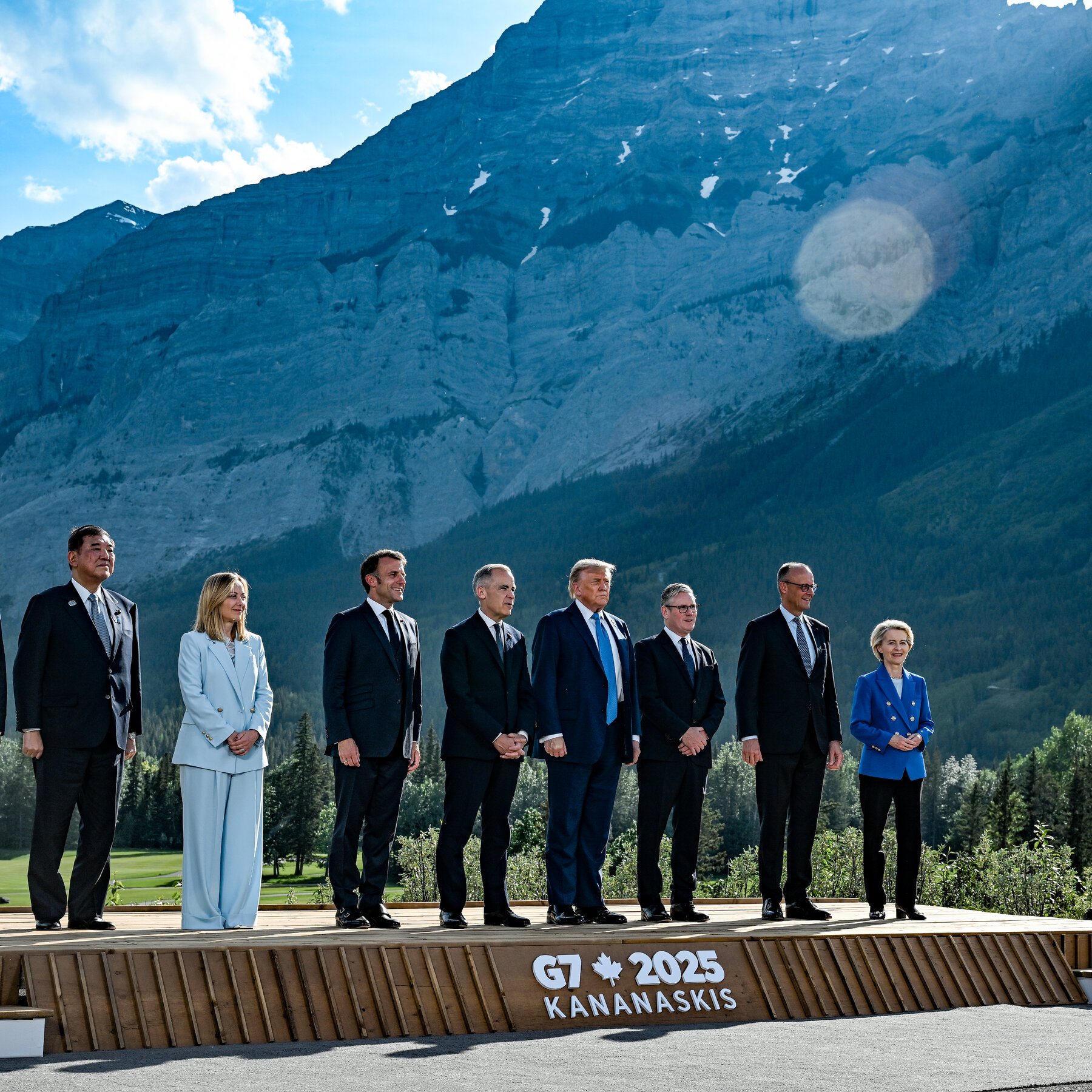
AdvertisementSKIP ADVERTISEMENTNews AnalysisIt Was Meant to Unify. Now the G7 Is Dogged by Chaos and Divided by Trump.Group of 7 meetings once embodied the effort to sustain the global diplomatic order. This year’s gathering, starting on Monday, symbolizes its fragmentation.Listen · 7:19 min Leaders of the Group of 7 nations at a summit in Kananaskis, Canada, last year.Credit...Kenny Holston/The New York TimesJune 14, 2026Updated 6:29 a.m.
ETThe last time the leaders of the world’s richest countries gathered in Évian-les-Bains, France, in June 2003, the United States had just invaded Iraq over the strident objections of France and Germany. President George W. Bush got chilly handshakes, but he and the other leaders worked to maintain the veneer of like-minded countries uniting to confront the perils of an unruly world.Twenty-three years later, as leaders gather in the same town amid another American war in the Middle East, the veneer has been stripped away.When President Trump arrives on Monday afternoon in Évian, an Alpine spa town on the southern shore of Lake Geneva, he will be greeted by European leaders who no longer view the United States as a partner on key issues such as climate change and security.
In some cases, they view the United States as a threat, after Mr. Trump’s destabilizing attacks on Iran that have roiled the world economy, his deepening disdain for NATO, and his threats to take over Greenland.“From the beginning of Trump’s second term, up until Greenland, the rule of thumb for America’s allies was, ‘Let’s bite our tongue and be nice to Trump,’” said Charles A.
Kupchan, a professor of international relations at Georgetown University. “Greenland and Iran are a double whammy, where allies now say, ‘We’ll work with Trump where possible, but we have to say no when necessary.’”However rancorous the split over the Iraq war in 2003, Mr.
Kupchan said that it did not fracture the foundations of NATO or of other multilateral institutions like the Group of 7. “That’s not where we are now,” he said, adding, “There isn’t a consensus within the G7 about what to do.”That does not mean the leaders will not seek to find some common ground.
Wars are rumbling on in Ukraine and Iran. Global energy supplies are being disrupted by Iran’s closure of the Strait of Hormuz. Worries about how artificial intelligence will upend the labor force are prompting calls for government regulation.Mark Landler is the Paris bureau chief of The Times, covering France, as well as American foreign policy in Europe and the Middle East.
He has been a journalist for more than three decades.AdvertisementSKIP ADVERTISEMENT