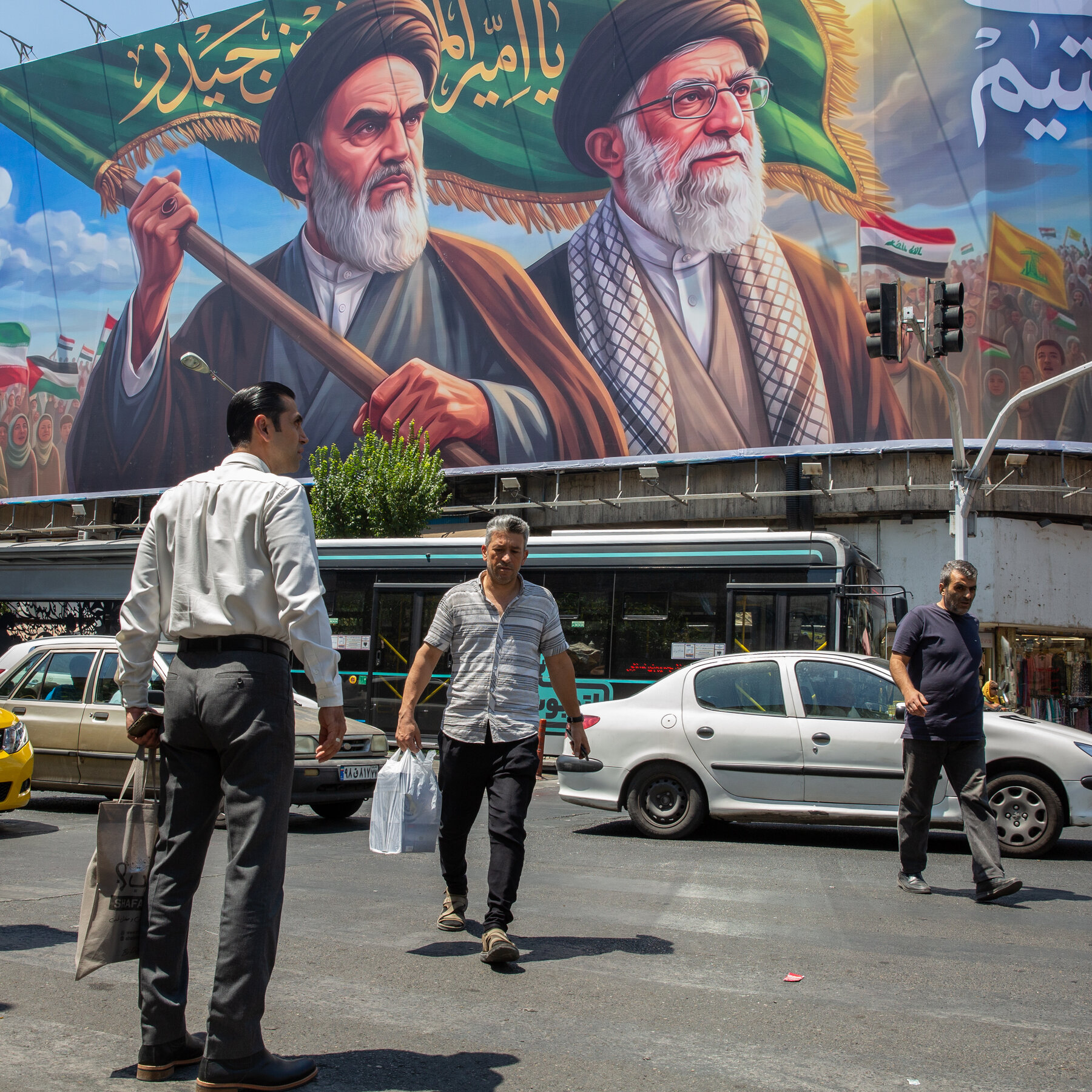
AdvertisementSKIP ADVERTISEMENTYou have a preview view of this article while we are checking your access. When we have confirmed access, the full article content will load.News AnalysisSince announcing a nominal cease-fire two months ago, Iran, Israel and the U.S. have remained locked in low-intensity violence that has become a new normal.Listen · 9:16 min In Tehran on Monday, a billboard featuring the Iran theocracy’s first two supreme leaders loomed over passers-by.
Credit...Arash Khamooshi/Polaris for The New York TimesJune 12, 2026In just the past five days, the United States and Iran traded missile strikes after the downing of an American helicopter; Israel bombarded Lebanon, drawing retaliation from Iran; and the Iran-backed Houthis joined the reprisal from Yemen.Then in a matter of hours on Thursday, President Trump called off another major attack on Iran and again held out the prospect of a peace accord, which Iran downplayed.
In the two months since the U.S. and Iran nominally declared a cease-fire, the line between peace and war has been all but erased across the Middle East, with attacks and counterattacks alongside promises to end the hostilities that never quite materialize. It is less a cease-fire than a “lesser fire,” in the words of the United Nations secretary general, António Guterres.
Even if the combatants manage to get a framework for a deal this time, this gray zone of “neither war nor peace” may persist for weeks or months, analysts and diplomats say. Neither Mr. Trump nor Iran appears ready to make significant concessions in negotiations for a long-term truce, with many devilish details to be worked out — not least over the future of Iran’s nuclear program.Such a stalemate would consign the Middle East to a purgatory of sporadic violence and constant anxiety.
And it would force the rest of the world to confront a stark new economic reality. Long-term disruption of oil and gas shipments would ripple into global supply chains, causing food shortages and driving up prices at the fuel pump and in grocery stores.“There’s a good chance that the current equilibrium or something like it persists,” said Caitlin Talmadge, a professor at the Massachusetts Institute of Technology who specializes in Persian Gulf security issues. “Not every war has a clean ending.”What makes this war particularly messy are its multiple combatants, all with their own, often conflicting, agendas.
Mr. Trump, facing midterm elections and political headwinds at home, has signaled he is eager to turn the page. Iran, having suffered fearful casualties, including the death of its supreme leader, Ayatollah Ali Khamenei, views this as a war of survival and is unlikely to limit its nuclear program in exchange for short-term respite.
And Israel regards Iran as an existential threat — its nuclear facilities buried under rubble but not wiped out, its proxies regrouping in Lebanon, Gaza and Yemen.Thank you for your patience while we verify access. If you are in Reader mode please exit and log into your Times account, or subscribe for all of The Times.Thank you for your patience while we verify access.Already a subscriber?
Log in.Want all of The Times? Subscribe.AdvertisementSKIP ADVERTISEMENT